In the quiet aftermath of a grand feast, when the table has been cleared and the echoes of laughter have faded, a unique opportunity emerges from the remnants of celebration. Those tender shreds of roasted poultry, once the centerpiece of the gathering, hold the potential to become something entirely new—a steaming bowl of restorative warmth that bridges the past meal with present comfort. This creation draws from the bones and meat left behind, simmering them with a medley of seasonal produce to extract deep, savory notes that linger on the palate. Imagine the golden liquid bubbling gently, infused with aromatic herbs that dance across the surface, inviting a spoonful that melts away the chill of autumn or winter air. What sets this approach apart is its emphasis on resourcefulness without monotony; each ingredient contributes a distinct layer, from the earthy sweetness of root vegetables to the bright acidity of a citrus finish. No two pots need taste identical, as the cook can weave in personal touches like a hint of smoked spice or a creamy swirl for silkiness. Beyond nourishment, it serves as a ritual of continuity, transforming what might have been discarded into a shared experience that extends the joy of the original event. Families or solitary diners alike find solace in its simplicity, yet the depth of flavor rivals any from-scratch preparation. The process itself becomes meditative, as steam rises and aromas fill the space, signaling that abundance persists even after the main event concludes. By embracing this method, one discovers that true culinary artistry often lies not in the grand production but in the elegant reuse of what remains, yielding a dish that nourishes body and spirit in equal measure. Such a soup stands as a testament to adaptability, proving that the best meals sometimes arrive not from fresh starts but from thoughtful continuations of prior abundance.
Ingredients (serves 4–6)
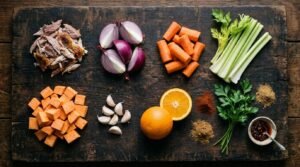
- 2 tablespoons olive oil or rendered turkey fat
- 1 large onion, cut into thick wedges
- 3 medium carrots, roughly chopped
- 2 celery stalks, roughly chopped
- 4 garlic cloves, left unpeeled
- 1 small sweet potato or butternut squash piece (about 300 g), cubed
- 1 teaspoon smoked paprika
- ½ teaspoon ground cumin
- ¼ teaspoon ground coriander
- Pinch of cayenne or aleppo pepper
- 1.2–1.5 liters turkey or chicken stock (or water plus a bouillon cube)
- 2–3 cups shredded leftover turkey
- Juice of 1 orange + 1 tablespoon zest
- 1 tablespoon apple-cider vinegar or lemon juice
- Salt and black pepper
- Fresh parsley or cilantro for garnish
- Optional finish: 1 tablespoon chili crisp or a drizzle of toasted sesame oil mixed with a little honey
Method
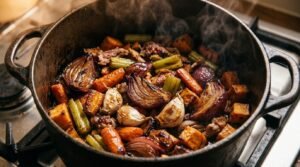
Begin by setting a heavy pot over a lively flame and letting a thin film of oil or turkey fat shimmer until it just begins to move. Drop in the thick onion wedges, carrot pieces, celery, and sweet-potato cubes so they sit in a single loose layer. Let them rest, turning only when dark amber patches appear along the edges and a faint caramel scent rises; this takes roughly eight to ten minutes. Slip the unpeeled garlic cloves into the gaps between the vegetables and allow their papery skins to blister and darken for another four or five minutes.
Lift the pot off the highest heat. Scatter the smoked paprika, cumin, coriander, and a whisper of cayenne across the vegetables so the powders darken and release their oils in half a minute. Return the pot to the flame, pour in the stock until the vegetables are just submerged, and bring the liquid to a quiet, steady bubble. Cover and leave it undisturbed until a knife slides through the sweet potato with no resistance—about fifteen to eighteen minutes.
Retrieve the garlic cloves, press the soft paste from their skins back into the pot, and discard the empty skins. Blend the contents until the texture turns completely smooth and velvety, either with an immersion blender in the pot or by transferring the mixture carefully to a standing blender and returning it. Season with salt and black pepper until the flavor feels balanced.
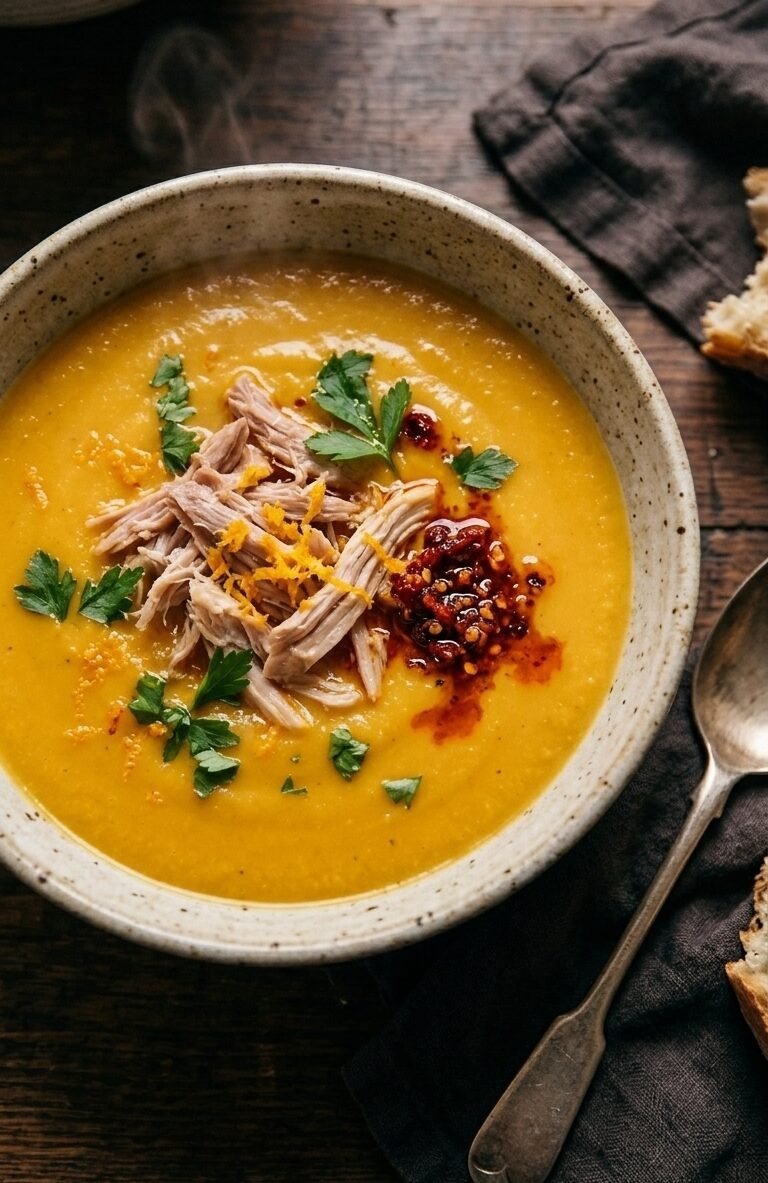
Take the pot completely off the heat. Fold in the shredded turkey, the orange juice, the zest, and the vinegar so the meat simply warms through in the residual heat. Rest the soup for two or three minutes. Ladle it into bowls and crown each serving with fresh herbs plus, if desired, a small spoon of chili crisp or a honey-sesame drizzle.
The finished soup carries its body from the roasted vegetables alone, keeps the turkey tender and separate, and stores well for three days, reheating gently when needed.
Alternative Tips & Common Pitfalls
When the roasted vegetables refuse to deepen in color, lower the flame slightly and grant them extra minutes rather than stirring constantly; constant motion steals the caramelization that builds the soup’s foundation. If the final purée tastes flat after blending, a single drop of the reserved orange zest stirred in at the very end often restores brightness without adding more liquid. Should the sweet potato cook unevenly, cut any remaining firm pieces smaller before the stock goes in so the entire base reaches the same soft stage together.
Avoid adding the turkey while the pot is still over active heat; the residual warmth of the soup is enough to bring the meat to serving temperature, and further simmering turns the shreds stringy. Do not blend the garlic skins into the soup—their papery bitterness travels through the entire batch once pulverized. Skip the temptation to thicken with flour or cream; the roasted sweet potato already supplies body, and extra starches mute the smoked-spice notes.
If the soup separates slightly on reheating, a brief whisk off the heat reunites it without boiling. Store the herbs and any chili-crisp finish separately so they stay vivid until the moment of serving. These adjustments keep the character of the dish intact while steering clear of the usual adjustments found in standard recipe notes.
Conclusion
What remains in the pot after the final ladle is more than a practical clearing of the refrigerator; it is a quiet continuation of the meal that began days earlier. The roasted sweetness of the vegetables, the smoke of the paprika, and the bright lift of orange sit together in a way that refuses to echo the original roast, yet still carries its memory. Each bowl becomes its own small ceremony—warm, silken, and finished only at the table—proving that the true close of a feast is not the emptying of the platter but the moment the last spoonful is raised in satisfaction.